How to Design a Cycling Club Jersey That Members Actually Want to Wear
A cycling club jersey has a difficult job. It has to represent the club, please riders with very different tastes, give sponsors fair space and still look good stretched across a rider leaning over the bars. Clubs planning custom team cycling jerseys often find that the design stage takes longer than production, so a clear process is worth having from the start.
Quick answer: Start with two or three club colours, design for the riding position and not a flat template, give sponsors defined zones, keep the club name readable from behind and from the side, and let members choose between a small number of finished options instead of designing by committee.
Where should a club jersey design begin?
Begin with identity, not decoration. Write down what must appear on the jersey: the club name, the logo, the town or region if it matters to members, and any sponsors. Then choose a limited palette. Two main colours and one accent are easier to recognise in a bunch than five colours competing for attention.
Look at what nearby clubs wear. On a busy weekend ride or at a local race, a kit that is too similar to a neighbouring club causes confusion. A distinctive colour or a bold band across the chest and sleeves helps your riders find each other quickly.
How does the riding position change the design?
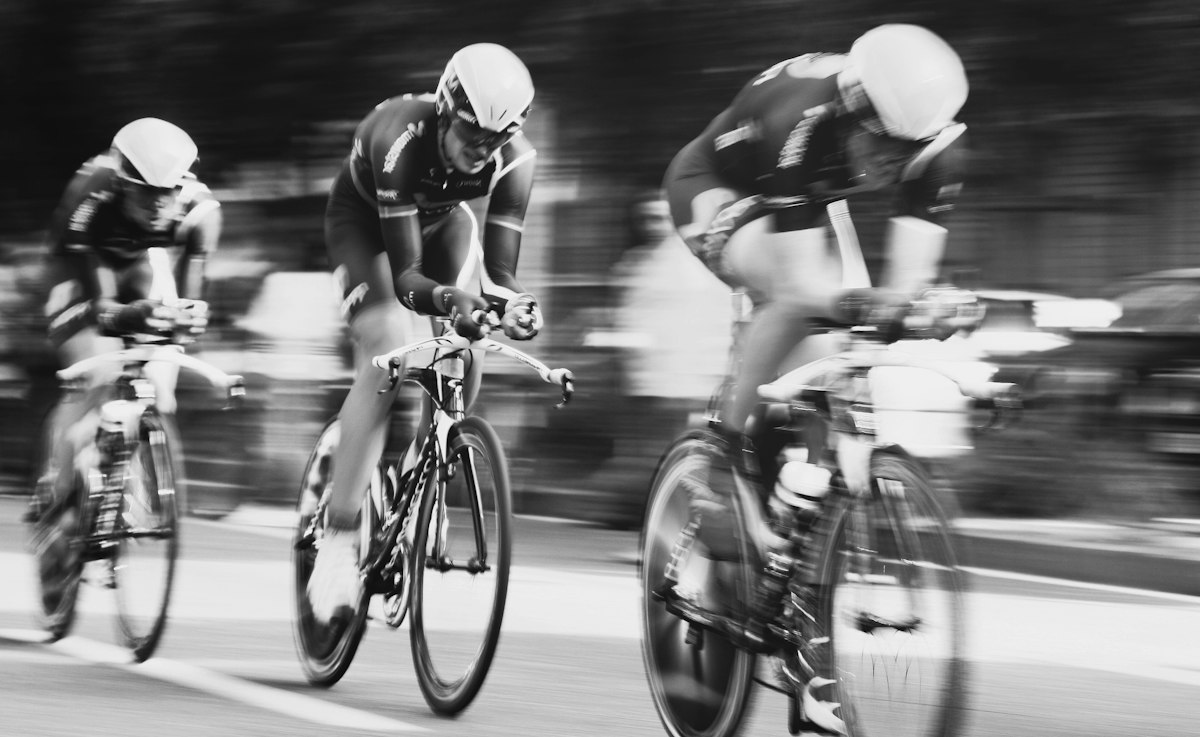
A cycling jersey is seen from the back and the side far more than from the front. The rider is bent forward, the front panel is partly hidden and the rear pockets are the most visible area. Put the club name where it can be read in that position: across the upper back, down the side panels or along the pockets.
The jersey is also made from several shaped panels. A stripe that looks straight on a flat template may bend at a seam. Sublimation allows a design to continue across panels, but the artwork must be set up panel by panel. Ask to see the design laid out on the actual pattern pieces before approving it.
How should sponsor logos be handled?
Sponsors help many clubs keep kit affordable, and they deserve clear placement. Problems start when logos are added one at a time until the jersey looks cluttered. Decide on zones first:
- Chest and upper back for the main sponsor
- Side panels and sleeves for secondary sponsors
- Rear pockets for the club name or a supporting partner
- Collar for a small club crest or website
Ask each sponsor for a vector logo and permission to use a single colour version. A set of logos in one or two colours looks far more professional than a patchwork of different brand colours on the same panel.
What about visibility on the road?
Club rides share the road with traffic, often early in the morning or in poor light. Dark kit looks smart but can be hard for drivers to see. You do not need a fully fluorescent jersey to improve this. A bright sleeve, a light coloured back panel or a contrasting band across the pockets makes a group easier to notice.
Some fabrics and trims include reflective details. If members ride in low light, ask what options are available and where they can be placed without interrupting the design.
How do you get members to agree?
Design by committee rarely ends well. A better method is to appoint a small group of two or three people, agree a brief with the wider club and have that group develop a few complete designs with the manufacturer. Members then vote on finished options.
Share mock-ups that show the front, back and side views, and where possible a view of a rider in position. Set a closing date for the vote and for size orders. A sizing sample set, if the supplier can provide one, lets members try before they commit and reduces returns and disappointment.
Frequently asked questions
Should the bib shorts match the jersey?
Matching side panels on the shorts complete the kit. Many clubs keep the shorts mostly black for practicality and add club colours on the leg band.
How often should a club change its design?
There is no rule. Keeping the core colours and updating details every few seasons lets older and newer kit sit well together.
Can members order different fits in the same design?
Often yes. Ask whether race and relaxed cuts, and men's and women's patterns, are available in one design.
Key takeaways
- Fix the club identity and a limited colour palette before adding detail
- Design for the back and side views, because that is how riders are seen
- Give sponsors agreed zones and use single colour logos where possible
- Let a small group develop options and let members vote on finished designs
Final thoughts
A good club jersey is one that members reach for even when it is not a club ride. Keep the design simple, readable and true to the club, and check it on the real pattern before production. Stitch Next, a sportswear manufacturer in Sialkot, Pakistan, makes sublimated cycling kit to order, and its custom team cycling jerseys page shows how a club design is turned into a finished jersey.